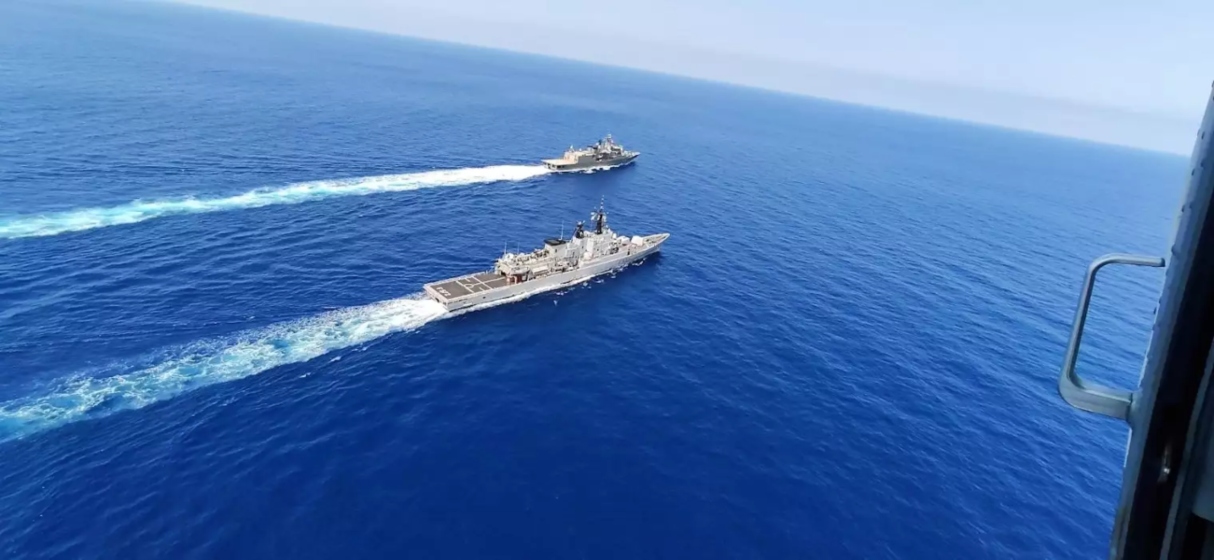
Greece is entering a new era of strategic rearmament, attempting to transform its Armed Forces from a mechanism of “managing decline” into a modern, network-centric deterrence force.
Behind the headlines surrounding frigates, submarines and transport aircraft lies a far more complex geopolitical and military equation: Athens’ effort to construct a unified operational doctrine capable of responding to the rapidly shifting balance of power in the Aegean and the Eastern Mediterranean.
This time, the objective is not merely the acquisition of new weapons systems. It is the integration of ships, submarines, aircraft and intelligence systems into a coherent architecture of strategic deterrence.
FDI Frigates: The Digital Shield of the Fleet
The French FDI Belharra frigates are emerging as the backbone of the Hellenic Navy’s next-generation doctrine. These are not simply new warships, but advanced air-defense platforms designed for high-intensity, technology-driven warfare environments.
Equipped with cutting-edge radar systems, network-centric warfare capabilities and multi-threat management technologies, the FDI frigates are expected to function as the “nervous system” of the Greek fleet.
At a time when drones, cruise missiles and electronic warfare are reshaping modern conflict, Greece is seeking to acquire capabilities that would have seemed unattainable only a decade ago.
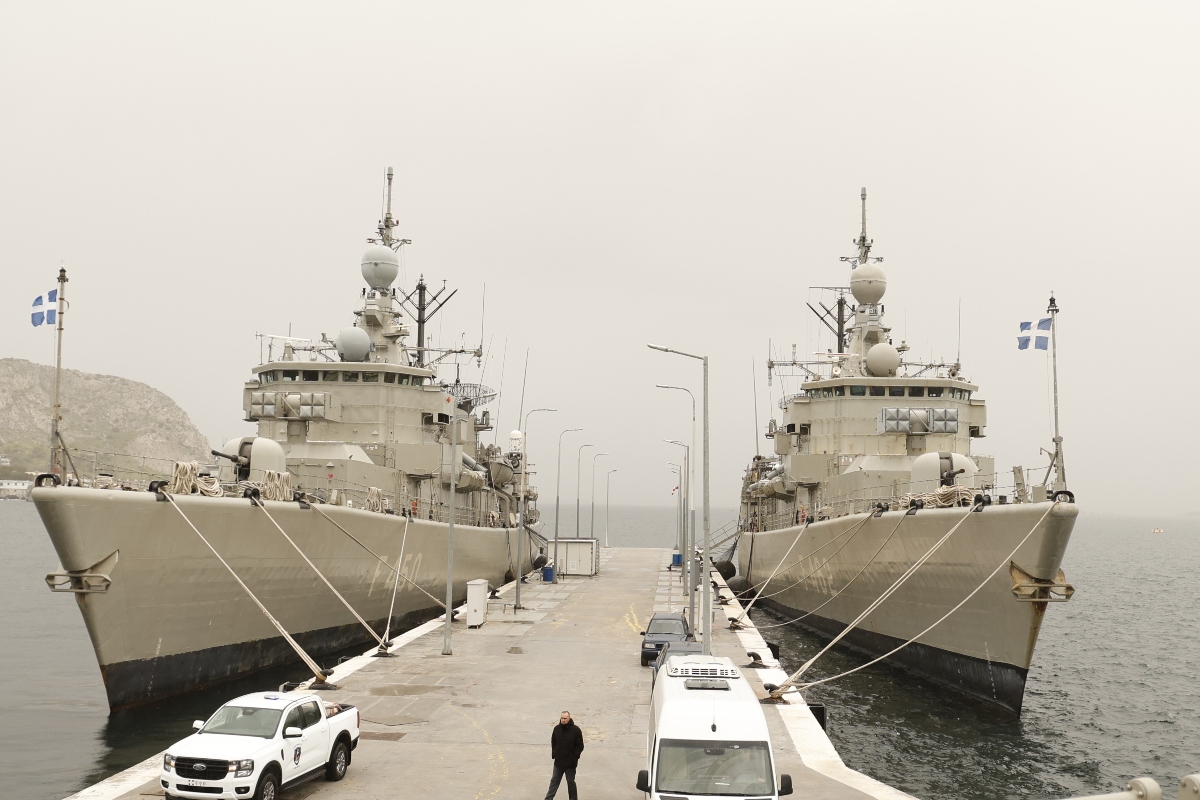

The Italian Bergamini Frigates and the Balance-of-Power Game
Within the same strategic framework, the Italian Bergamini-class frigates are being considered as both an interim and operationally critical solution.
These vessels are regarded as highly effective multi-role platforms, particularly suited for:
- anti-submarine warfare,
- escort missions,
- and high-mobility operations in the Aegean Sea.
Defense analysts argue that the Bergamini frigates could complement the FDI fleet by creating a layered naval force with distinct yet mutually reinforcing operational roles.
At the same time, the modernization of Greece’s MEKO-class frigates remains vital. For years, the Hellenic Navy operated under a survival mentality — maintaining aging assets until the next procurement program arrived. Without the MEKO upgrade, a dangerous operational gap could emerge before the full deployment of the new fleet.
The Silent Battle Over Greece’s Next Submarines
If frigates represent the visible side of Greek deterrence, submarines remain the country’s silent strategic advantage.
And it is precisely in this domain that one of Europe’s fiercest defense rivalries is unfolding, with France and Germanycompeting aggressively for the Hellenic Navy’s next major submarine contract.
Germany is relying on decades of cooperation with Greece and the operational experience of Greek crews with the Type 214 “Papanikolis” submarines, considered among the most advanced conventional submarines in the world.
France, meanwhile, is attempting to capitalize on the growing Franco-Greek defense partnership by expanding its footprint into the submarine sector.
The stakes are exceptionally high.
During the 2020 Greek-Turkish crisis, Greek submarines acted as a decisive force multiplier in the Aegean. Operating silently and away from media attention, they imposed uncertainty on Turkish naval movements and significantly strengthened Greece’s deterrence posture.
The Critical Front of Military Transport Aircraft
At the same time, Athens is also trying to address another long-standing vulnerability: the aging transport fleet of the Hellenic Air Force.
The legendary C-130 Hercules, known in Greece as the “Heraklis,” have carried the burden of the country’s strategic airlift operations for decades — from troop deployment and logistical support to humanitarian missions and medical evacuations.
However, aging airframes and limited availability rates have made fleet renewal unavoidable.
Defense Minister Nikos Dendias’ recent visit to Portugal was directly linked to this effort, with the Brazilian C-390 Millennium increasingly viewed as a leading candidate for Greece’s next-generation transport aircraft program.
Alongside the C-130s, the C-27 Spartan fleet continues to perform critical tactical missions, particularly across Greece’s island geography, offering flexibility and rapid response capability.
Athens’ Emerging Deterrence Doctrine
Beyond procurement programs and political debates, the strategic objective is becoming increasingly clear.
Greece is attempting to build:
- a multi-layered naval force,
- enhanced air mobility,
- a network-centric operational picture,
- and a highly credible deterrence capability.
In a region where instability in the Eastern Mediterranean, Greek-Turkish tensions and global power competition are constantly evolving, Athens is seeking to shape Armed Forces capable not merely of maintaining balance — but of projecting strategic superiority.
Because in today’s geopolitical environment, power is no longer measured solely by how many weapons a country possesses, but by how effectively, rapidly and cohesively it can deploy them.
Source: pagenews.gr
-
EU Funds €277M Rail Upgrade: Greece Builds a New Geopolitical Transport Corridor
-
Dendias Sends Strong Defense Message: “Greece Has Nothing to Envy in Drone Warfare”
-
Papastavrou Signals Greece’s Energy Rise: “A Strong Nation with National Confidence”
-
Mitsotakis from Thessaloniki: “New Democracy Is Building Greece of 2030”
-
Bloomberg: Turkey Prepares Maritime Zones Bill Covering the Aegean and Eastern Mediterranean
-
Greece–US: Trump speech at the Acropolis scenarios – diplomacy, MAGA and major deals