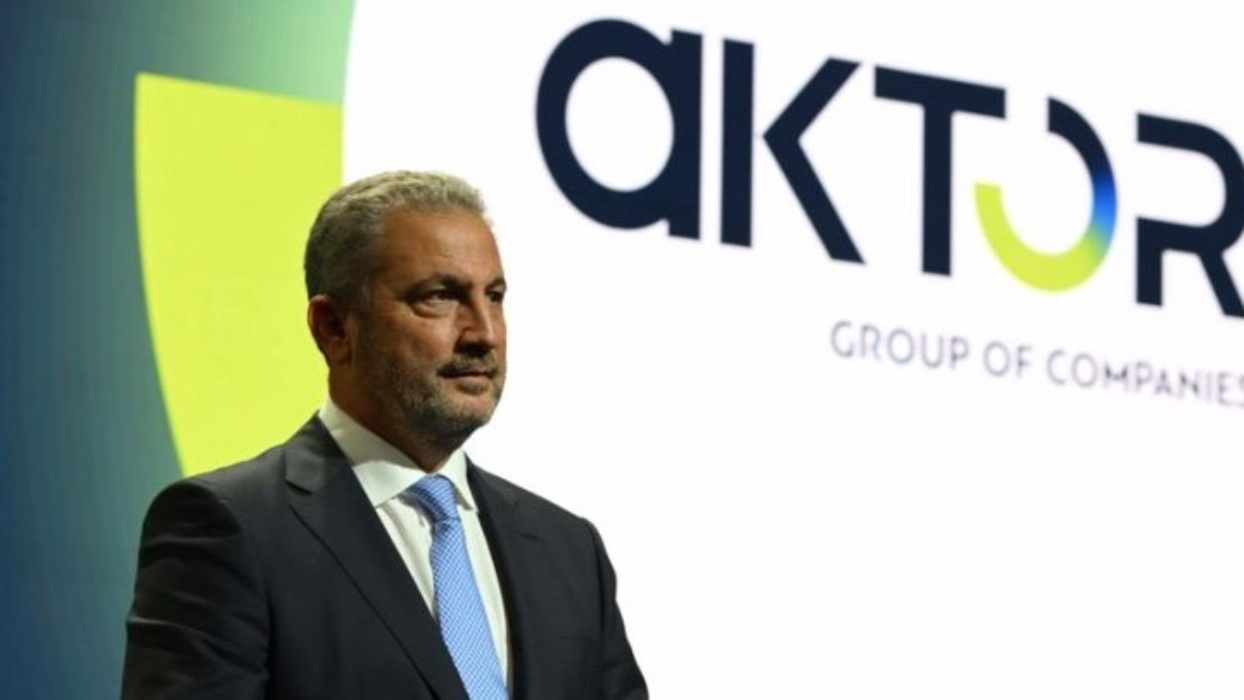
The energy transformation of Southeast Europe is entering a new phase, with the CEO of Alexandros Exarchou presenting a now mature geopolitical and commercial framework: the Vertical LNG Corridor, a project designed to turn Greece into a strategic energy gateway for Europe.
The AKTOR Group estimates that secured and contracted gas flows already exceed 4–4.5 billion cubic meters (bcm) annually, with upside potential as Europe accelerates diversification away from Russian gas.
From concept to functioning energy market
Exarchou describes a clear transition from theory to execution:
“Until recently we were talking about a concept. Today we are talking about agreements, volumes, and a real energy market taking shape.”
The Vertical Corridor is built on LNG import routes and interconnection pipelines linking Greece, Albania, Bulgaria, Romania, and Ukraine.
Geopolitical realignment of Europe’s gas supply
European energy policy is undergoing structural change. According to data from the International Energy Agency and Eurostat:
- Russian gas imports to the EU have fallen from ~40% (2021) to below ~15% (2024–2025)
- LNG imports from the United States and Qatar have significantly increased
- Europe remains structurally dependent on flexible LNG supply chains
Exarchou emphasizes that this shift fundamentally changes market dynamics:
“The issue is no longer price alone—it is availability. There will be competition for LNG cargoes.”


4.5 bcm baseline – expansion toward 8–10 bcm
The current commercial framework includes:
- 1 bcm to Albania
- 0.5 bcm to Bosnia and Herzegovina
- ~2 bcm to Romania
- additional flows toward Bulgaria and Ukraine under negotiation
This creates a potential corridor capacity of 8–10 bcm annually, enough to materially reshape regional energy security.
LNG markets: from pricing to scarcity
Research from European energy bodies including ENTSOG highlights:
- Europe will require sustained LNG imports of 200+ bcm annually by 2030
- Asian demand increasingly competes for global LNG cargoes
- Price volatility at TTF reinforces the importance of long-term contracts over spot exposure
Exarchou summarizes the structural risk:
“Even if prices fluctuate, the real challenge will be securing physical volumes.”
Greece as a strategic energy gateway
The model positions Greece as a structural entry point for LNG into Europe:
- LNG import and regasification infrastructure
- Pipeline redistribution toward Southeast and Eastern Europe
- Integration into a wider European energy security architecture
Exarchou argues this elevates Greece’s geopolitical role:“Greece can become a true energy gateway for Europe.”
Energy security vs. transition constraints
While LNG secures supply, the broader transition to renewables introduces new system challenges:
- Rapid growth of renewables across Europe
- Grid congestion and lack of storage capacity
- Increasing curtailment of renewable output
This reinforces gas as a transitional stabilizer for system reliability.
Infrastructure expansion and investment strategy
AKTOR is also expanding into:
- Infrastructure concessions
- PPP projects across the Balkans
- Energy and transport assets with long-term cash flows
The strategy focuses on predictable revenues and regional expansion beyond Greece.
A new energy doctrine for Southeast Europe
The Vertical Corridor is evolving from infrastructure project into a geo-economic energy architecture. As Europe searches for supply security and diversification, the strategy outlined by Alexandros Exarchou positions Greece at the center of a new regional energy system.
Energy in the 21st century is no longer just a commodity market—it is a geopolitical structure.
Source: pagenews.gr
-
Greece Tightens Tourism Construction Rules: Land Requirements Rise to 16 Acres in Hotspots
-
Brain Gain Momentum: 473,000 Greeks Return Home as Rebrain Greece Draws Record Crowds in London
-
A Naval Chessboard in Aegean:Bergamini Frigates,FDI Warships and Submarines Reshape Greece’s Defense Doctrine
-
EU Funds €277M Rail Upgrade: Greece Builds a New Geopolitical Transport Corridor
-
Dendias Sends Strong Defense Message: “Greece Has Nothing to Envy in Drone Warfare”
-
Bloomberg: Turkey Prepares Maritime Zones Bill Covering the Aegean and Eastern Mediterranean