


Balkan Acceleration Toward the EU: Greece Pushes for Historic Enlargement Before 2027
 ΧΡΟΝΟΣ ΑΝΑΓΝΩΣΗΣ 5 '

Notice: Undefined variable: ad_code in /var/www/vhosts/stage.pagenews.gr/httpdocs/wp-content/themes/pagenews_vw/functions.php on line 120
The renewed momentum surrounding the accession process of the Western Balkans is no longer viewed in Brussels as a distant diplomatic ambition. It is increasingly considered a strategic geopolitical priority directly linked to European security, energy stability, migration management and the European Union’s broader influence in Southeastern Europe.
Speaking from Bratislava during the Ministerial Meeting of the “Friends of the Western Balkans” group, Greek Foreign Minister George Gerapetritis outlined Athens’ evolving strategy: Greece aims to become the principal catalyst for the region’s European integration.
“The accession perspective of the Western Balkans is of vital importance both for the peoples of the region and for the European Union itself,” Gerapetritis stated, emphasizing that a stronger and more resilient Europe must include the Western Balkans.
The Greek diplomatic initiative appears to revive the spirit of the 2003 Thessaloniki Agenda, when Greece first championed the European future of the Balkan region. Today, however, the geopolitical environment is far more complex. The war in Ukraine, expanding Russian influence, Chinese infrastructure investments, Turkish regional ambitions and mounting migration pressures have transformed EU enlargement into a strategic necessity rather than merely a political aspiration.
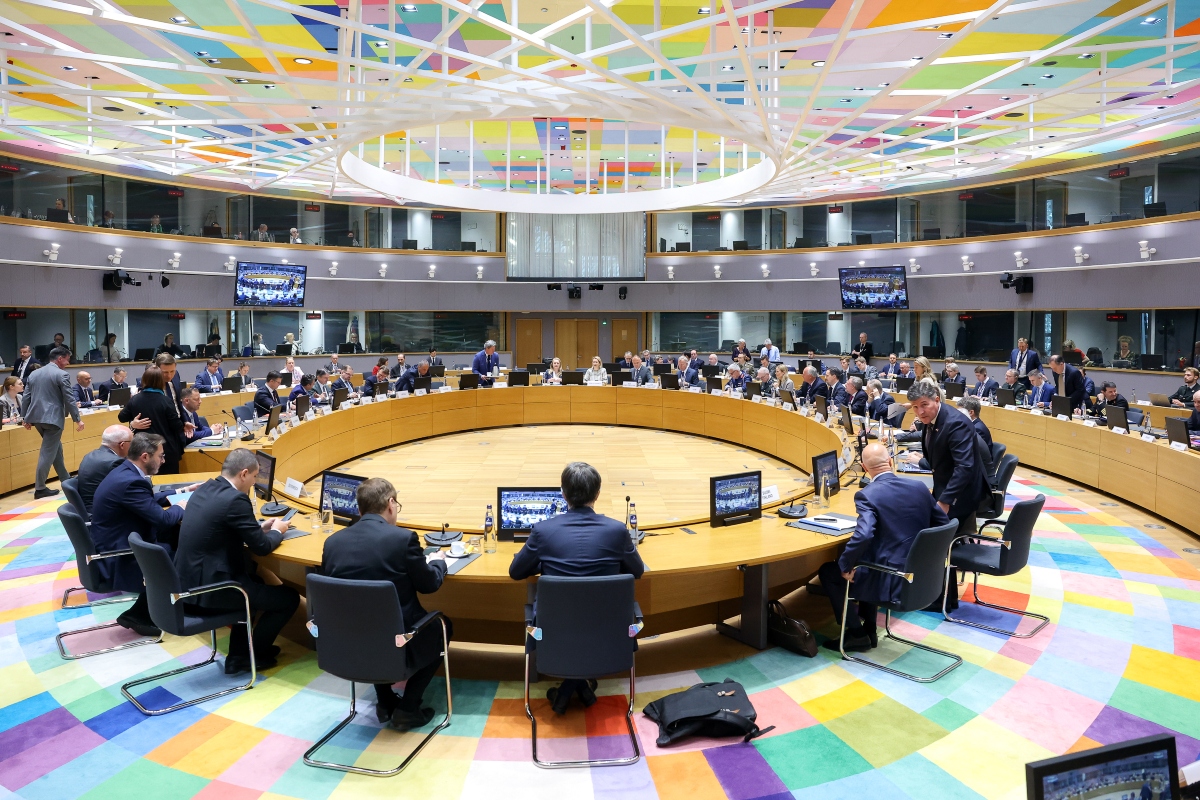
The “Delphi Declaration” and Greece’s Diplomatic Offensive
Athens has already advanced the so-called “Delphi Declaration,” a joint political initiative reaffirming that the future of the Western Balkans lies within the European Union. The declaration highlights the importance of institutional reforms, rule of law, respect for international law and alignment with the EU acquis.
“Greece is the country accelerating the accession of the Western Balkans,” Gerapetritis stressed, signaling Athens’ ambition to shape the next phase of European integration in Southeastern Europe.
Diplomatic sources in Brussels suggest that Greece sees the period leading up to its Presidency of the Council of the European Union in the second half of 2027 as a crucial “window of opportunity” for meaningful progress.
Enlargement as a Geostrategic Imperative
The acceleration of the accession process is not solely about European integration. It is increasingly viewed as a geopolitical stabilization mechanism.
European officials have repeatedly warned that prolonged delays in enlargement create strategic vacuums that external actors — including Russia, China and Turkey — are eager to exploit.
EU institutional documents now characterize enlargement as a “geostrategic investment in peace, security and stability.”
Particular concern remains focused on:
- political instability in Bosnia and Herzegovina,
- tensions between Serbia and Kosovo,
- democratic backsliding,
- corruption and weak judicial systems,
- and the persistent risk of renewed nationalist polarization.
Against this backdrop, Greece is attempting to position itself as a reliable bridge between Brussels and the Balkans, leveraging both its EU and NATO membership and its geographic proximity to the region.
Which Country Could Join the EU First?
Within European institutions, Montenegro and Albania are widely considered the frontrunners for eventual EU accession, with some officials suggesting that at least one Western Balkan country could join before the end of the decade if reforms accelerate.
However, major obstacles remain:
- entrenched corruption,
- institutional fragility,
- political polarization,
- unresolved bilateral disputes,
- and enlargement fatigue within several EU member states.
Serbia, for example, continues to face criticism from Brussels over rule-of-law concerns and judicial independence, while EU financial support mechanisms have come under increased scrutiny.
Greece’s 2027 Strategy
Athens is signaling that it does not intend to remain a passive observer of developments in the Balkans.
Gerapetritis announced a new round of diplomatic visits across the Western Balkans, alongside Greece’s intention to host the next meeting of the “Friends of the Western Balkans.”
“The coming months are exceptionally critical,” he underlined, directly linking Greece’s upcoming EU Presidency in 2027 to the possibility of historic enlargement breakthroughs.
Should Athens succeed in advancing even one accession process during its presidency, it would likely represent Greece’s most significant geopolitical achievement in Southeastern Europe since the Prespa Agreement.
Source: pagenews.gr
Διαβάστε όλες τις τελευταίες Ειδήσεις από την Ελλάδα και τον Κόσμο
-
Exarchou: “Greece Is Becoming Europe’s Energy Gateway – LNG Is Redrawing the Balance”
-
Greece Tightens Tourism Construction Rules: Land Requirements Rise to 16 Acres in Hotspots
-
Brain Gain Momentum: 473,000 Greeks Return Home as Rebrain Greece Draws Record Crowds in London
-
A Naval Chessboard in Aegean:Bergamini Frigates,FDI Warships and Submarines Reshape Greece’s Defense Doctrine
-
EU Funds €277M Rail Upgrade: Greece Builds a New Geopolitical Transport Corridor
-
Mitsotakis from Thessaloniki: “New Democracy Is Building Greece of 2030”













Το σχόλιο σας