Turkey’s latest letter to the United Nations is being viewed by diplomatic observers as far more than a routine response to a Greek protest. Analysts describe it as part of Ankara’s broader effort to institutionalize its geopolitical narrative in international organizations and strengthen its long-term maritime claims.
In a formal communication dated May 8, 2026, addressed to the UN Secretary-General and the President of the Security Council, Turkey rejected Greece’s objections raised during the April 29 Security Council debate on maritime security and protection of sea lanes.
During that session, the Greek delegation challenged the use of the term “Turkish Straits,” arguing that the wording carries political and sovereignty implications beyond a simple geographic description.
Ankara responded sharply.
“The Greek objection was unfortunate and appeared aimed at domestic political considerations rather than the substance of the debate,” the Turkish letter stated.
Turkey further insisted that the term “Turkish Straits” is a “well-established geographical expression” widely used for decades in international organizations, NATO documents and International Maritime Organization (IMO) texts.

A Battle Over Words — and Strategic Influence
Behind what appears to be a technical disagreement over terminology lies a much deeper geopolitical confrontation.
Regional analysts note that Turkey has systematically sought in recent years to:
- reinforce its legal and diplomatic footprint in international institutions,
- advance the “Blue Homeland” maritime doctrine,
- normalize expanded Turkish influence in surrounding waters,
- and gradually establish new geopolitical realities through diplomatic language and international usage.
The issue is especially sensitive because the Bosporus and Dardanelles are among the world’s most strategically critical waterways, linking the Black Sea to the Mediterranean.
Since the war in Ukraine, the Turkish-controlled straits have become even more central to NATO security calculations, Russian naval strategy and global grain and energy transportation routes.
The Montreux Convention at the Center of the Dispute
In its letter, Ankara directly invoked the 1936 Montreux Convention, arguing that: “The term is fully compatible with the Convention and geographically describes waterways under Turkish sovereignty.”
Turkey emphasized that the treaty regulates navigation through:
- the Bosporus,
- the Sea of Marmara,
- and the Dardanelles,
but does not standardize or restrict geographical naming conventions.
Greek diplomatic circles, however, fear that the repeated use of terms such as “Turkish Straits” in official international settings could gradually create diplomatic and legal precedents with long-term political implications.
The “Blue Homeland” Doctrine Returns to the Forefront
The dispute fits into Turkey’s wider maritime and geopolitical strategy across the Eastern Mediterranean.
In recent months, Ankara has:
- revived demilitarization claims against Greek islands,
- challenged maritime boundaries,
- expanded naval activity in the Aegean and Eastern Mediterranean,
- and intensified efforts to frame Greece as a destabilizing actor in international forums.
Western diplomats increasingly believe Turkey is attempting to capitalize on:
- geopolitical instability following the Ukraine war,
- its expanded strategic value inside NATO,
- and Europe’s continued dependence on Turkish regional cooperation.
Greece Responds Through Internationalization
Athens appears determined not to leave such diplomatic moves unanswered.
Greek officials argue that formally recording objections at the UN level is essential in order to:
- prevent the normalization of Turkish narratives,
- avoid the creation of “linguistic precedents,”
- and expose what Athens describes as Turkey’s revisionist foreign policy agenda.
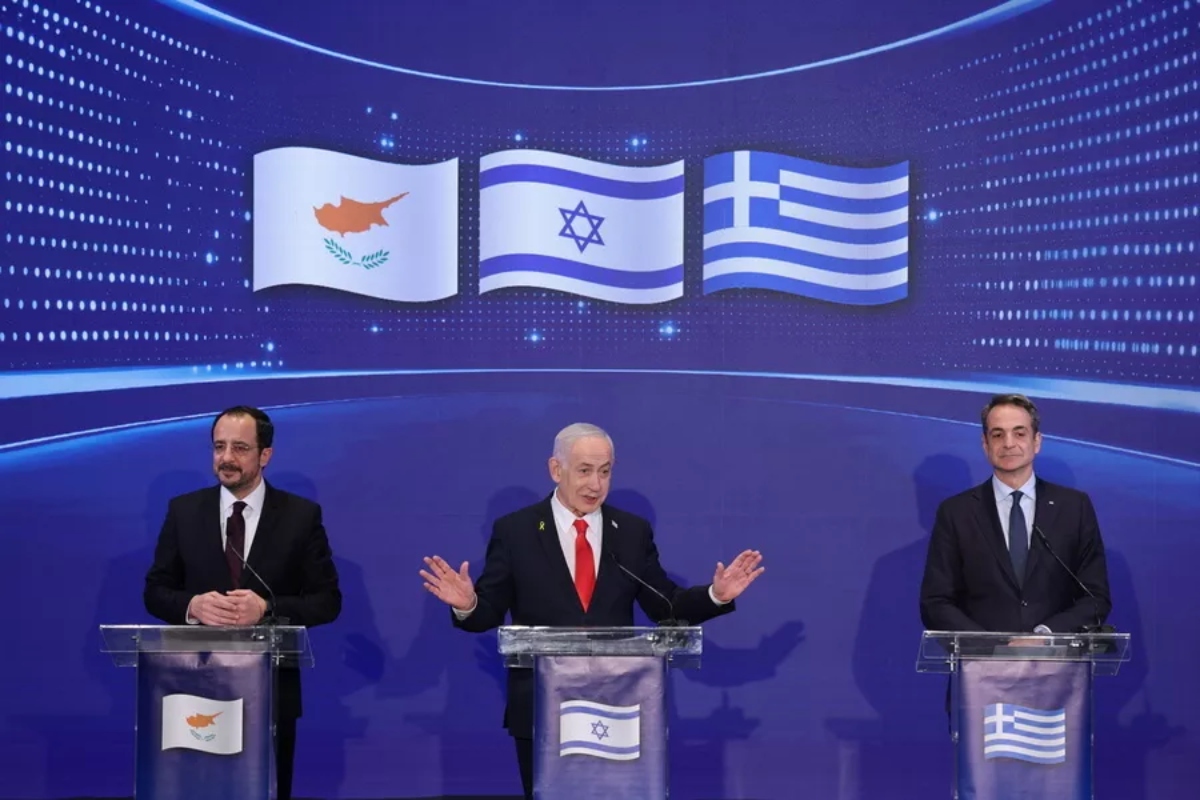
At the same time, Greece and Cyprus are reportedly intensifying coordination within the European Union and the United Nations in an effort to build broader diplomatic resistance against Turkish maritime claims.
The Deeper Message Behind Ankara’s Move
Beyond the dispute over terminology, Ankara’s broader strategic message is increasingly clear:
Turkey does not intend to retreat from its expanding maritime doctrine or its broader geopolitical ambitions.
Instead, it appears determined to consolidate an international perception in which:
- the Aegean,
- the Eastern Mediterranean,
- and the Turkish Straits
form part of a unified sphere of strategic Turkish influence.
Diplomatic observers warn that the coming months could prove critical, as Greek-Turkish tensions continue shifting from bilateral disagreements toward a wider struggle over international legitimacy, legal interpretation and geopolitical influence.
Source: pagenews.gr
-
Balkan Acceleration Toward the EU: Greece Pushes for Historic Enlargement Before 2027
-
Exarchou: “Greece Is Becoming Europe’s Energy Gateway – LNG Is Redrawing the Balance”
-
Greece Tightens Tourism Construction Rules: Land Requirements Rise to 16 Acres in Hotspots
-
Brain Gain Momentum: 473,000 Greeks Return Home as Rebrain Greece Draws Record Crowds in London
-
A Naval Chessboard in Aegean:Bergamini Frigates,FDI Warships and Submarines Reshape Greece’s Defense Doctrine
-
EU Funds €277M Rail Upgrade: Greece Builds a New Geopolitical Transport Corridor