


Turkey: “Blue Homeland” Dispute, Accusations Against Greece, and New F-35 Tensions with the US
 ΧΡΟΝΟΣ ΑΝΑΓΝΩΣΗΣ 6 '

Notice: Undefined variable: ad_code in /var/www/vhosts/stage.pagenews.gr/httpdocs/wp-content/themes/pagenews_vw/functions.php on line 120
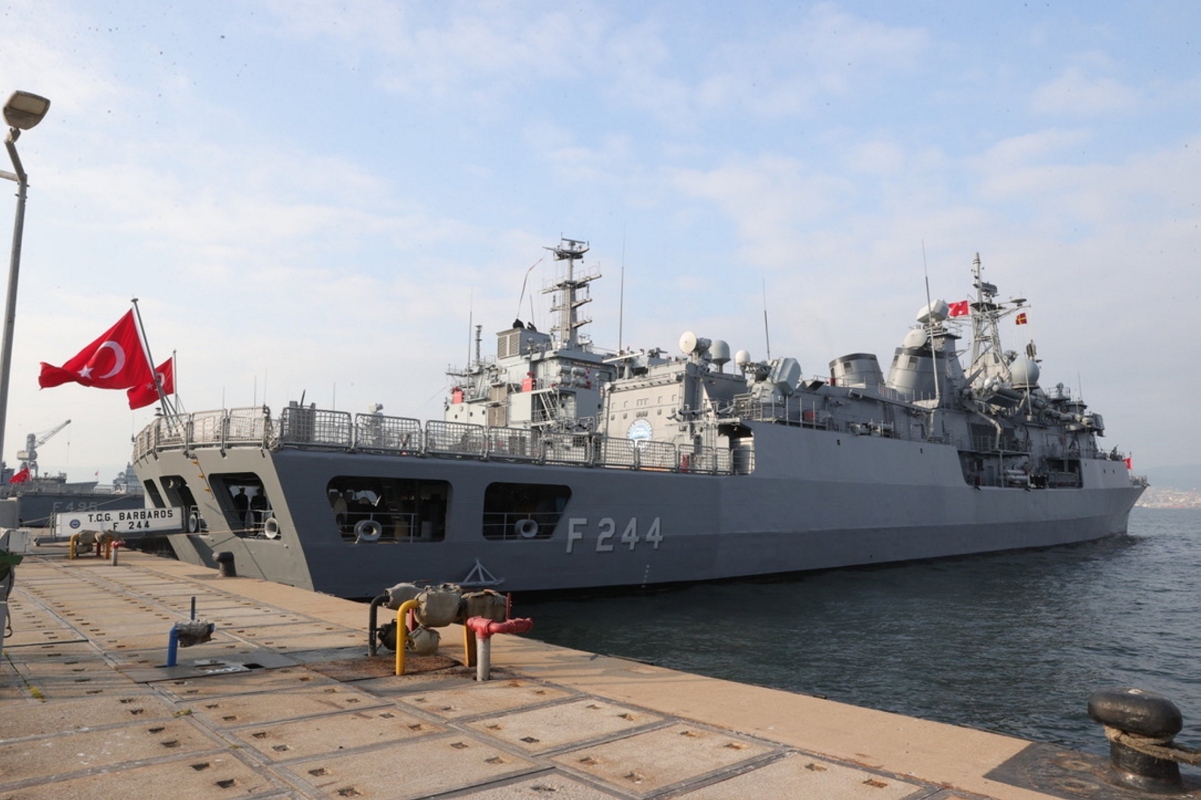
A renewed wave of geopolitical tension is unfolding around Turkey’s maritime policy doctrine known as the “Blue Homeland,” alongside growing friction between Turkey, Greece, and United States over defense procurement and regional security architecture.
At the center of the controversy are three interconnected issues: Turkey’s planned maritime legal framework, long-standing Aegean disputes, and renewed debate in Washington over Turkey’s possible return to the F-35 fighter jet program.
Turkey rejects “misinformation” claims over Blue Homeland legislation
Turkish media, including Milliyet, report that sections of the Greek press have “misrepresented” Ankara’s upcoming legislation on maritime jurisdiction.
According to Turkish officials and legal experts:
“There have been significant speculations, misinformation, and exaggerations in parts of the Greek press regarding the bill being prepared by Turkey on maritime jurisdiction areas.”
The Turkish side insists the draft framework:
- does not include maps or geographic coordinates
- does not redraw maritime borders
- does not expand existing jurisdiction unilaterally
- serves as a legal codification of maritime principles within domestic law
Officials also argue that the legislation aligns with international maritime principles, even though Turkey is not a signatory to UNCLOS.
Δείτε αυτή τη δημοσίευση στο Instagram.Η δημοσίευση κοινοποιήθηκε από το χρήστη Fatih (@feyfurfat1010)
Aegean tensions: dispute over 6 nautical miles remains central
A recurring element in Turkish messaging is opposition to any potential Greek extension of territorial waters beyond 6 nautical miles in the Aegean Sea.
Turkish officials and affiliated analysts reiterate:“Turkey has made clear it will not accept territorial waters beyond 6 miles in the Aegean.”
They link this position to Turkey’s long-standing 1995 parliamentary authorization of casus belli, warning against unilateral moves that could alter the current balance.
The Greek position, based on international law, remains aligned with the United Nations Convention on the Law of the Sea (UNCLOS), which Turkey does not recognize.
F-35 debate returns to Washington: S-400 remains the core obstacle
A parallel diplomatic dispute is escalating in the United States Congress over the possibility of restoring Turkey’s access to the F-35 stealth fighter program.
Lawmakers have circulated a letter opposing any shift in policy, arguing that Turkey continues to operate Russian-made S-400 air defense systems — a key violation of US defense procurement rules.
The controversy highlights persistent strategic mistrust between Turkey and United States, particularly after Turkey’s removal from the F-35 program following its purchase of the Russian system.
Strategic analysis: three overlapping pressure points
The convergence of maritime doctrine, Aegean sovereignty disputes, and defense procurement tensions reflects a broader strategic triangle:
- Legal–maritime dimension: competing interpretations of maritime jurisdiction and UNCLOS
- Military–security dimension: NATO interoperability concerns linked to S-400 systems
- Geopolitical dimension: US–Turkey strategic alignment tensions affecting regional balance
Turkey is simultaneously attempting to:
- assert legal framing of maritime claims through domestic legislation
- maintain deterrence posture in the Aegean
- re-open strategic defense negotiations with Washington
Greece, meanwhile, continues to anchor its position in international maritime law and EU diplomatic backing.
The combined friction over the “Blue Homeland” framework and the F-35 debate underscores a broader reality: Eastern Mediterranean security remains highly volatile, with legal, military, and diplomatic disputes reinforcing one another rather than resolving.
Without structural de-escalation mechanisms, each new legislative or political move risks amplifying existing tensions between Ankara, Athens, and Washington.
Source: pagenews.gr
Διαβάστε όλες τις τελευταίες Ειδήσεις από την Ελλάδα και τον Κόσμο
-
“Europe Needs Bigger Banks and Champions” — Pierakakis Pushes for Deep EU Integration with Letta
-
“Big Brother” Tax Watch: Greece’s Tax Authority to Monitor Every Cash Register Transaction Live
-
“Europe Moves Its Borders Outside Europe: Return Hubs Plan Sparks Political Earthquake”
-
“Greece and Cyprus Form Unified Front: Message of Deterrence and EU Awakening”
-
Turkey Escalates at the UN: “The Straits Are Turkish and Will Be Called Turkish”
-
Balkan Acceleration Toward the EU: Greece Pushes for Historic Enlargement Before 2027
















Το σχόλιο σας